Built for one process
General software approximates your workflow. A tool built for it does the exact steps, in the order your business does them.
SATO SOLUTIONS
loading demos
press any key to skip
service.custom_software
Custom software from Sato Solutions is an internal tool, an integration, or an automation built around your process rather than a product configured to approximate it: the material list, the route, the estimate, the invoice, or for a store the stock, the pricing, and the fees. I scope it after a free consultation, fix the price before the build starts, build it on your data and your accounts, and hand over the code.
02section.work
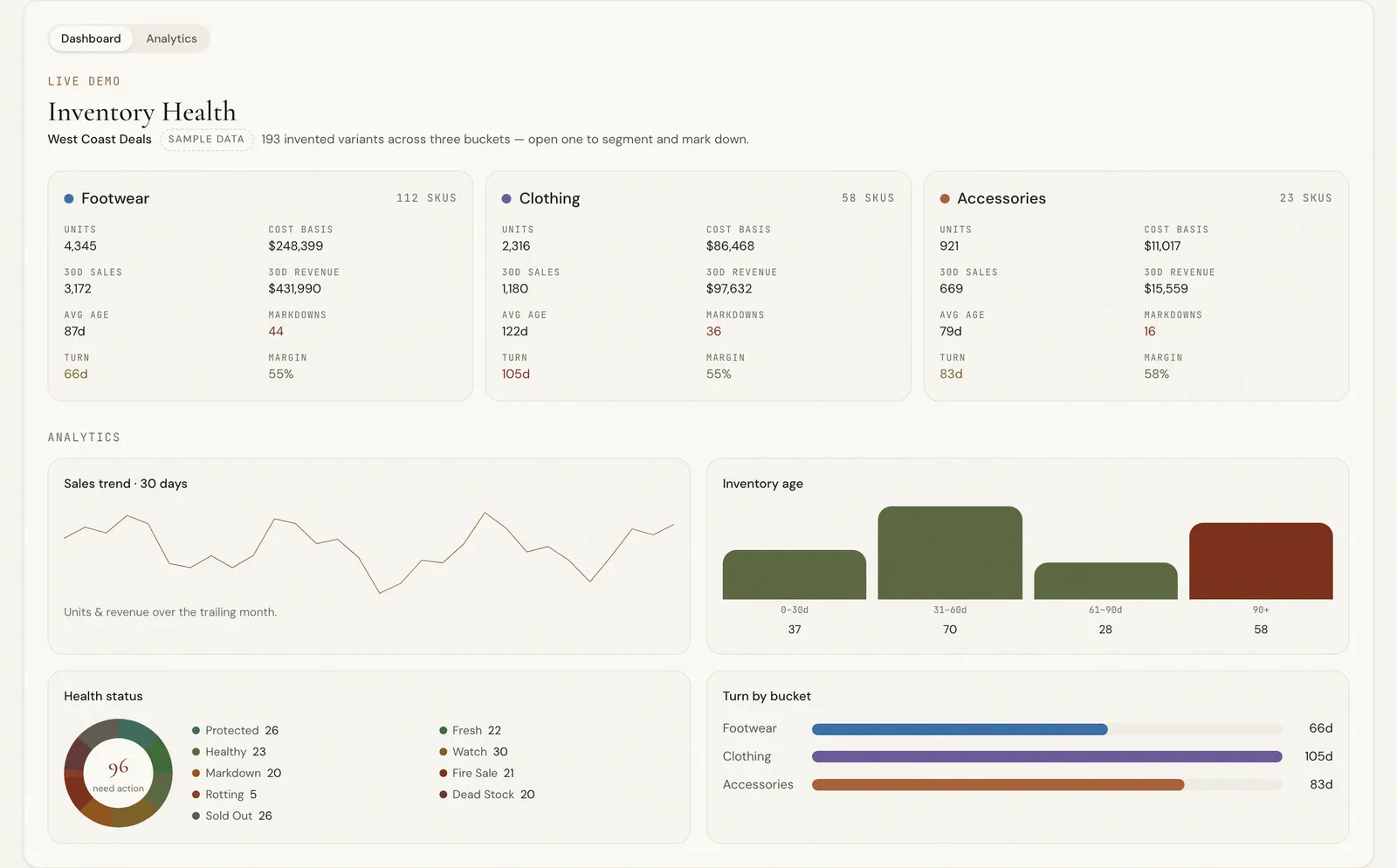
Every variant scored from Fresh to Dead Stock every day, with the markdown price for what is aging out. Built for West Coast Deals, and running there since.
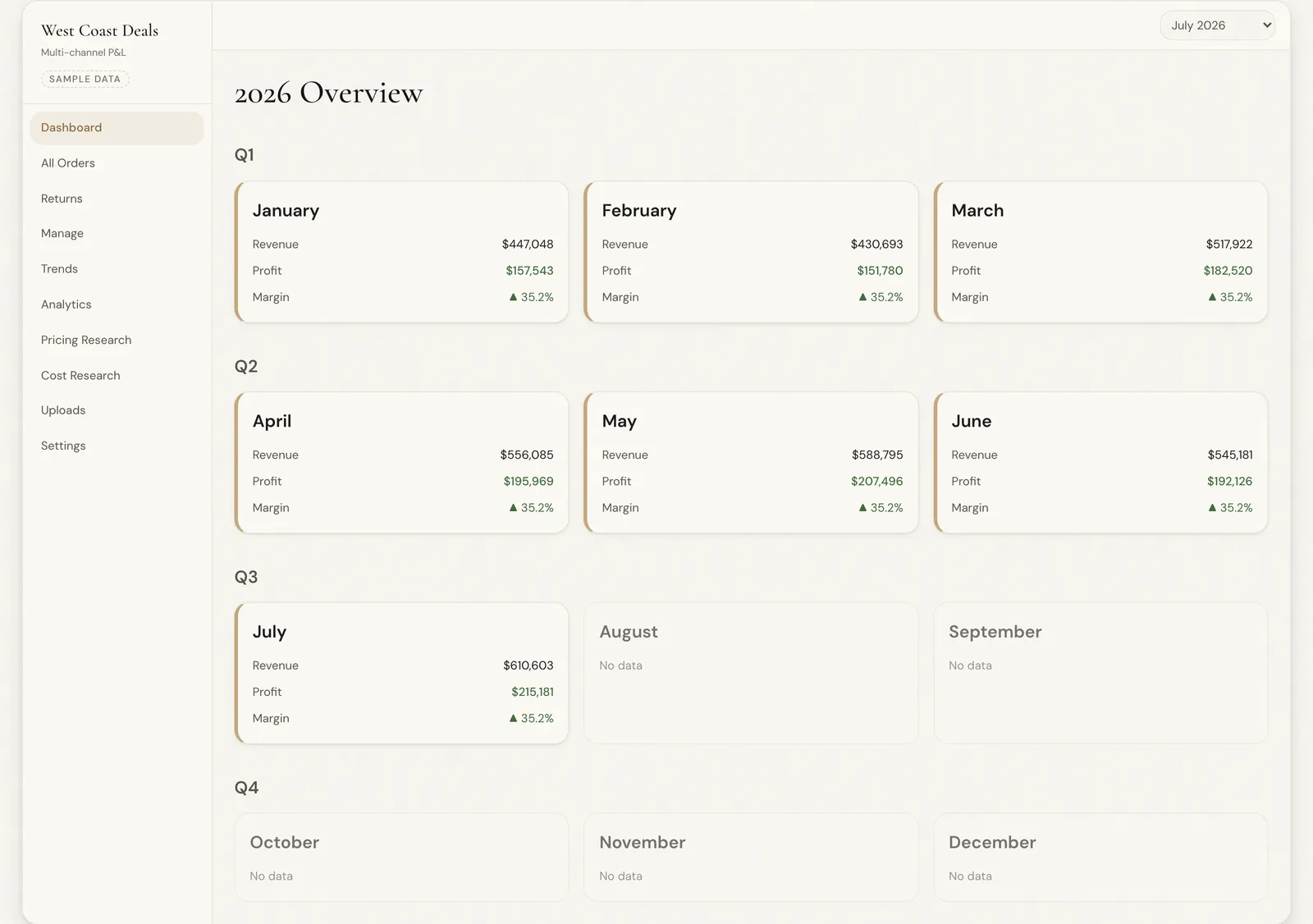
Net profit per marketplace from the payout exports and the landed costs. With the receipt reader, the store's month-end accounting went from 210 hours a month to 3.
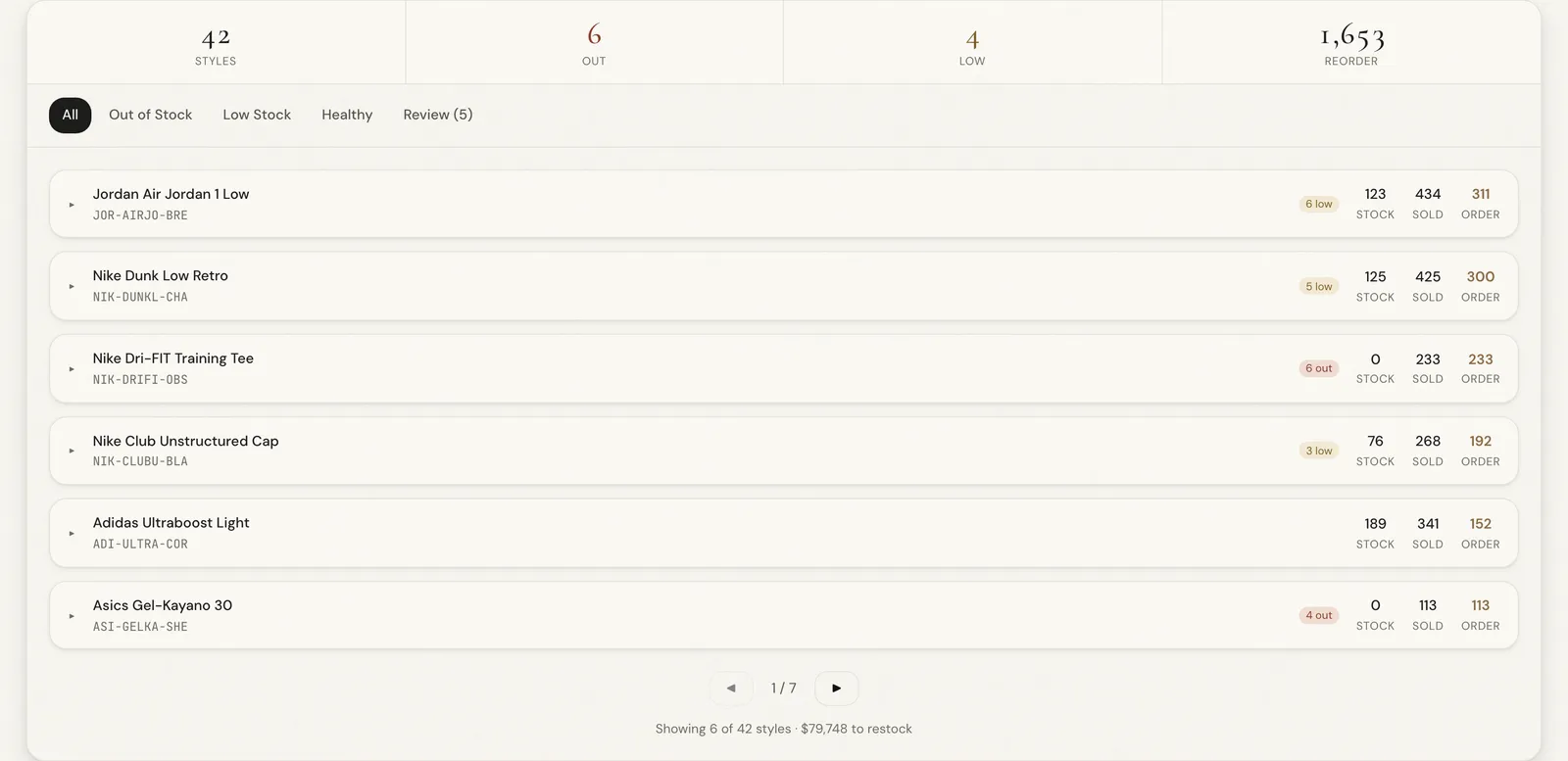
The weekly buy plan from sales, with the margin gate and the review queue, so the buy is decided from the numbers instead of memory.
03section.who
04section.deliverables
A written scope from the free consultation: what the tool has to do, what it reads, and what comes out the other end.
A fixed price agreed before the build starts. No hourly creep.
Built on your data and running on your accounts, so nothing depends on a vendor's infrastructure.
Connected to what you already run: Shopify, the marketplaces, QuickBooks, Google Sheets, or anything in the list below.
Handover with the code in your name and a walkthrough for whoever runs it.
Every build backed for a year. If the tool is not doing what it was built to do, I put it right at no charge.
Custom builds are scoped per build, with the price fixed before the build starts. The six finished tools have a monthly license price. See all pricing
05section.why
General software approximates your workflow. A tool built for it does the exact steps, in the order your business does them.
The price is agreed before the build starts, from a written scope, and the scope is what the finished tool is measured against.
Your data stays in your systems. The tool reads and writes through your own accounts, not through a vendor's.
The code is in your name at handover. There is no subscription to keep paying and no roadmap to negotiate with.
The tools on this site run every day inside an eight-channel store. The results shown are that store's, measured on its books.
If the tool is not doing what it was built to do, I put it right at no charge.
06section.stack
Everything I have built with or wired into. If your business runs on something that is not here, it can almost certainly be connected.
07section.how
One conversation about the process: who does it, what they open, and what comes out the other end. The 12-question intake covers the same ground if you would rather write it down.
You get the scope in writing: what the tool reads, what it does, what it produces, and the price. Nothing is invoiced until you confirm it.
The tool is built against your real data and connected to the accounts it will run on, and you see it working on your data before it goes live.
The code goes into your name, whoever runs the tool is walked through it, and it goes live.
If it stops doing what it was built to do, I fix it at no charge. A change to what it does is a new scope, quoted the same way.
08section.proof
The figure is from one business, measured from the outside by Ahrefs: same team, same offer, no new ad spend.
09section.faq
It is scoped per build, because no two processes are the same. The consultation says what the tool has to do, and the price is fixed before the build starts. The budget field on the form is there so I can scope it to what you had in mind.
Internal tools, integrations, and automations. For a trade, the material list, the route, the estimate, and the invoice that are still done by hand. For a store, inventory scoring, repricing, reorder planning, profit by marketplace, receipt intake, and listing tools. The seven demos on the tools page are real builds.
Yes, for the six with a price on the pricing page. Each one is a monthly license with 30 days notice. All but Receipt Intake have a one-time setup fee, which covers connecting your accounts, loading your data, and the first two weeks. If the logic has to change for your process, that is a custom build, quoted after the free consultation.
You do, from handover. It runs on your accounts and your data, so it does not disappear when a vendor changes its pricing or gets acquired, and you can take it to any developer.
Every build is backed for a year. If the tool is not doing what it was built to do, I put it right at no charge. A change to what it does is a new scope.
Buy while your process is generic. Build when you want a rule the vendor does not offer, or when the subscription costs more over three years than owning the tool would. The consultation says which, and I will tell you when off-the-shelf is the right answer.
The consultation is free. You get the scope of the project and what I recommend before anything starts.
Custom software is scoped after the free consultation, at a fixed price agreed before the build starts, and backed for a year.